
Porcelain tile remains the strongest all-around choice for shower floors and wet areas, waterproof luxury vinyl (LVP/LVT) delivers the best mix of comfort and budget for the whole bathroom, and engineered or waterproof-rated hardwood works only in well-ventilated bathrooms where you accept some added risk. Each option trades something: tile costs more in labor, vinyl is softer than tile, and wood needs the most upkeep.
TL;DR:
- Porcelain tile offers the highest water resistance and durability, especially for shower floors, but costs more and takes longer to install.
- Luxury vinyl (LVP/LVT) with SPC cores is a water-resistant, budget-friendly option suitable for the entire bathroom, especially when installed with proper moisture precautions.
- Engineered hardwood and waterproof-rated hardwood can work in bathrooms only when specifically approved by the manufacturer and with proper ventilation and sealing.
- Waterproof laminate offers a realistic wood appearance at a lower cost, but it requires careful selection and proper installation to prevent moisture damage.
- Natural stone, terrazzo, and concrete provide a high-end look but demand sealing, more maintenance, and a bigger budget compared to tile or vinyl options.
Table of Contents
- What to look for when choosing bathroom flooring
- Ceramic and porcelain tile: pros, cons, and best uses
- Luxury vinyl (LVP/LVT) and vinyl sheet: when vinyl is the practical pick
- Engineered hardwood and waterproof hardwood: aesthetic vs. risk
- Waterproof laminate and other wood-look alternatives
- Natural stone, terrazzo, and concrete: luxury options and care needs
- Linoleum, cork, and bamboo: niche, eco, and alternative choices
- How to choose: match material to bathroom type, budget, and household
- Installation, maintenance, and lifespan: what to expect after you pick
- Why trust this guide: Domestic Kitchen and Bath’s installer perspective
- Installer perspective: balancing beauty with long-term performance
- Domestic Kitchen and Bath: full-service bathroom remodeling and flooring installation
- FAQ
- Sources
What to look for when choosing bathroom flooring
Waterproof and water-resistant are not the same thing, and the difference affects how your floor holds up over time. A waterproof material, like an SPC-core vinyl plank, keeps moisture from penetrating the core and seams even underwater, while a water-resistant material slows moisture but can eventually swell or warp if water sits on it, according to MSI Surfaces.
Before you settle on a material, weigh these factors against your specific bathroom:
- Water resistance: how the core and seams handle standing water, not just surface splashes.
- Durability: resistance to scratches, dents, and daily wear.
- Slip resistance: traction when wet, especially in showers and around tubs.
- Maintenance: sealing, grout cleaning, or seam checks required over time.
- Installation complexity: subfloor prep, membranes, and labor time.
- Budget: material plus installation cost, according to BobVila.
Shower floors demand the highest water resistance and slip resistance. Main bathroom floors balance comfort with moisture protection, and powder rooms, with no tub or shower, give you more design freedom since standing water is rarely a concern.
Ceramic and porcelain tile: pros, cons, and best uses
Porcelain absorbs less water than standard ceramic, which is why it shows up most often in showers and other wet zones. According to BobVila, porcelain has very low water absorption and stays easy to clean, while some unglazed ceramic tiles are more porous and may need sealing to perform well in a bathroom.
A majority of shower renovations now use tile, according to Houzz’s 2026 bathroom trends study, which found tile in 79% of shower upgrades, split between porcelain (42%) and ceramic (35%). That split reflects porcelain’s edge in moisture performance.
A few things to confirm before you commit to tile:
- Check the slip-resistance rating, particularly for shower pans and tub surrounds.
- Have grout sealed on installation and resealed periodically to prevent staining and water intrusion.
- Expect subfloor prep and a longer installation timeline than vinyl or laminate.
- Consider large-format tile, mosaics, or wood-look porcelain for different budgets and looks.
Tile costs more upfront and takes longer to install, but a properly set porcelain floor can last decades with minimal replacement risk.
Luxury vinyl (LVP/LVT) and vinyl sheet: when vinyl is the practical pick
Luxury vinyl plank (LVP) and luxury vinyl tile (LVT) click together in floating installations or get glued down, while vinyl sheet comes in large rolls that minimize seams entirely. All three are popular for bathrooms because they resist water at the surface and feel warmer underfoot than tile.
A common misconception is that all vinyl is equally tough. MSI Surfaces notes that vinyl is waterproof but softer than porcelain, so it can dent or scratch more easily under heavy furniture or dropped objects. NTPavers adds that professionals often see premature wear when homeowners assume vinyl is indestructible just because it resists water.
- SPC (stone plastic composite) cores are fully waterproof and more dimensionally stable than WPC cores, making them the better choice for wet areas.
- LVP and LVT work well as a whole-bathroom floor, especially in budget renovations where tile’s cost is a stretch.
- Vinyl sheet with welded seams offers near-total moisture protection in small, awkward-shaped bathrooms.
Pro Tip: Ask your installer specifically for SPC-core vinyl in bathrooms, not WPC, since SPC resists swelling at the seams even with repeated moisture exposure.
Engineered hardwood and waterproof hardwood: aesthetic vs. risk
Engineered or waterproof-rated hardwood can work in a bathroom, but only where the manufacturer specifically approves it for that use. Even then, wood is more vulnerable to standing water and ambient humidity than porcelain tile or SPC vinyl.
If you go this route:
- Confirm the manufacturer’s bathroom rating before purchase, not just a general “water-resistant” label.
- Install proper underlayment and keep the room well ventilated to manage humidity.
- Wipe up standing water immediately, especially near seams, where swelling starts first.
This option suits powder rooms or bathrooms with strong exhaust fans more than high-moisture shower rooms.
Waterproof laminate and other wood-look alternatives
True waterproof laminate differs from older water-resistant versions: the newer products use sealed cores that resist swelling at seams, while older laminates only slow moisture absorption. Waterproof laminate gives you a realistic wood look at a lower cost than engineered hardwood, and it is a reasonable DIY project for homeowners comfortable with click-lock flooring.
Even with a true waterproof rating, avoid letting water sit on the surface, and check that the specific product is rated for bathroom use. Installation costs and difficulty typically fall between vinyl, which is easier, and engineered hardwood, which demands more precision.
Natural stone, terrazzo, and concrete: luxury options and care needs
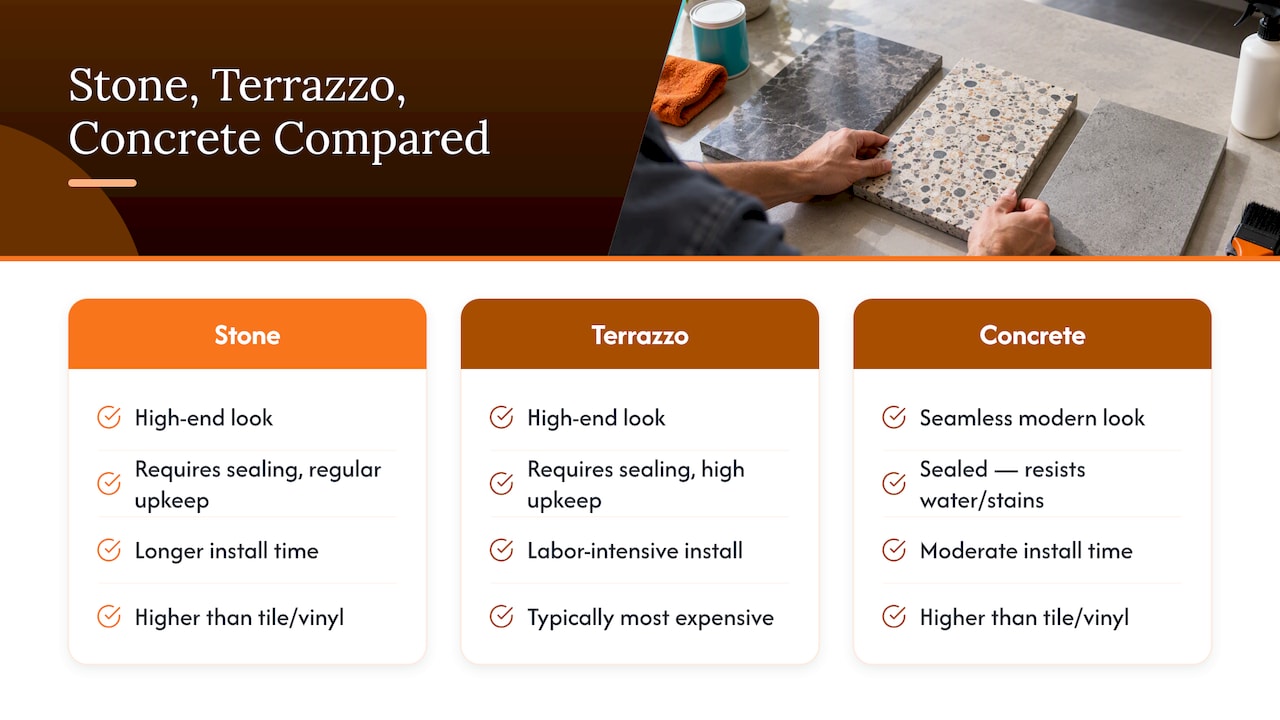
Natural stone and terrazzo bring a high-end look but need consistent upkeep. Both require sealing to resist staining and moisture penetration, and BobVila notes that terrazzo in particular is labor-intensive to install and typically costs more than tile or vinyl.
Concrete offers a seamless, modern alternative. According to the Concrete Network, sealed concrete resists water and stains and pairs well with radiant heat, though it needs periodic resealing to stay protected. Installers often recommend under-tile or under-floor heating alongside concrete or tile to offset the cold, hard feel underfoot.
Both stone and concrete demand a bigger budget and more installation time than tile or vinyl, so they suit homeowners prioritizing a custom look over lower cost.
Linoleum, cork, and bamboo: niche, eco, and alternative choices
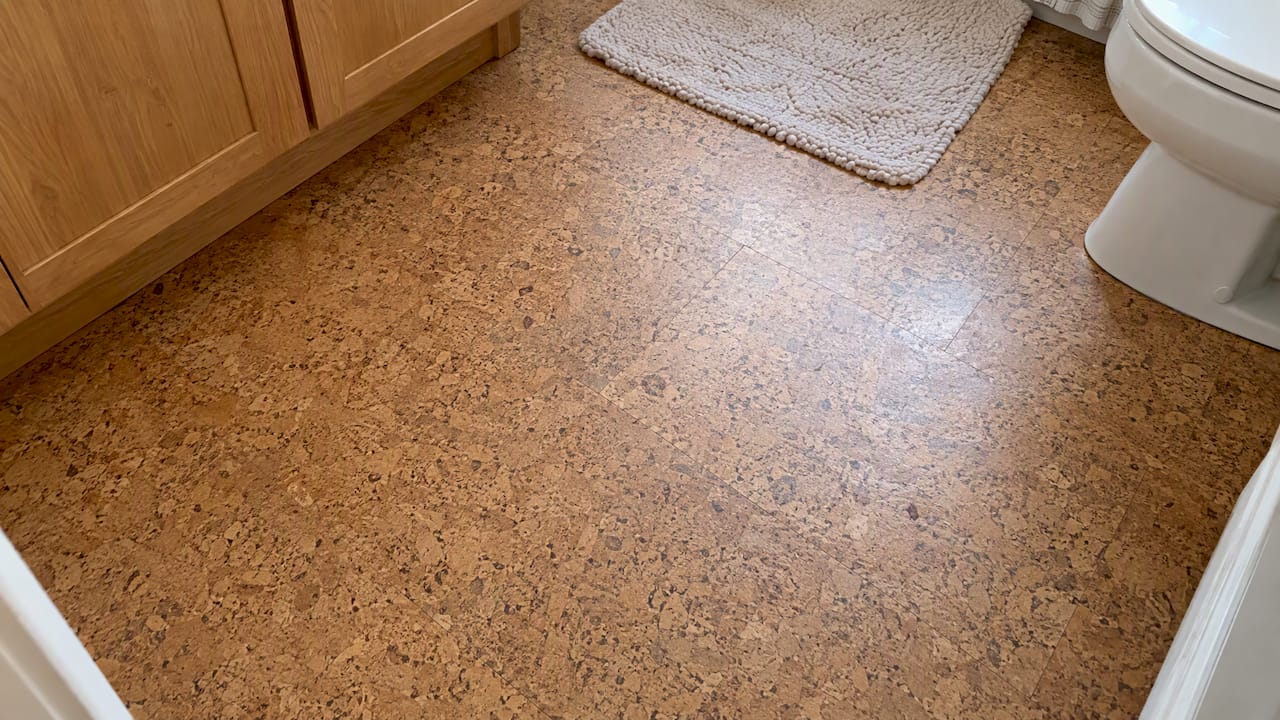
These materials can work in a bathroom, but only in bathroom-rated versions. BobVila warns that many standard linoleum, cork, and bamboo products are not built for wet rooms and will fail if exposed to standing water.
Linoleum can be a sustainable choice when the product is rated for damp rooms and seams are properly sealed. Cork feels warm underfoot and is eco-friendly, but it needs sealing and regular maintenance to resist moisture. Bamboo requires an engineered, bathroom-rated product, since standard bamboo swells when exposed to humidity.
How to choose: match material to bathroom type, budget, and household
Start by separating your bathroom into zones: shower floor, tub surround, and the main floor or powder room, since each has different moisture exposure. Then weigh your household’s needs against your budget tier.
- For shower floors, prioritize porcelain tile or SPC vinyl regardless of budget, since water exposure is constant.
- For the main bathroom floor, choose waterproof LVP for budget-conscious projects or porcelain for maximum durability.
- For powder rooms, consider waterproof laminate, engineered hardwood, or even cork, since standing water is rare.
- For households with kids, pets, or elderly members, prioritize slip resistance over style, and lean toward textured porcelain or SPC vinyl.
- Before buying, request samples, confirm the manufacturer’s bathroom rating in writing, and consult a professional for subfloor or shower-pan work.
Installation, maintenance, and lifespan: what to expect after you pick
Installation timelines vary by material. Tile and stone take the longest because of subfloor prep and waterproof membrane work in wet areas, while vinyl and laminate install faster with simpler click-lock or glue-down methods.
Routine maintenance differs too:
- Reseal grout, stone, and concrete on a periodic schedule to maintain water resistance.
- Check vinyl seams occasionally for lifting or gaps, especially in high-traffic bathrooms.
- Watch for buckling, grout delamination, or persistent odors, which often signal moisture getting underneath the surface.
Pro Tip: If you notice a musty smell near the base of a tub or shower, call a professional promptly. Trapped moisture under flooring can damage the subfloor before any visible signs appear.
Why trust this guide: Domestic Kitchen and Bath’s installer perspective
With over 25 years of experience and more than 1,000 completed projects, our team at Domestic Kitchen and Bath has seen the mistakes that shorten a bathroom floor’s lifespan: insufficient slope toward the drain, skipped waterproof membranes under tile, and materials rated for “damp” rooms installed in true wet zones. Before signing off on any flooring project, confirm your contractor addresses slope, membrane placement, and manufacturer ratings matched to each zone of the room.
Installer perspective: balancing beauty with long-term performance
In our experience, waterproofing details matter more than surface finish for long-term value. A beautiful floor with a poorly sloped shower pan will fail years before a plainer floor installed correctly. Choose a material your household will actually maintain, not just one that photographs well.
— Cameron
Domestic Kitchen and Bath: full-service bathroom remodeling and flooring installation
When you want flooring handled as part of a complete renovation, our team manages design, waterproofing, and installation under one contract, backed by a satisfaction guarantee and warranty protection suited to the local climate.
- Full bathroom remodels including flooring, waterproofing, and fixtures.
- Licensed project management with transparent pricing from start to finish.
Visit our bathroom remodeling page to request an estimate for your project.
FAQ
What is the current trend in bathroom floors?
Tile remains the dominant choice for shower upgrades, with Houzz’s 2026 study reporting tile used in 79% of shower renovations, split between porcelain (42%) and ceramic (35%). Waterproof vinyl is also gaining ground for whole-bathroom floors where comfort and budget matter more than maximum durability.
What is the alternative to tile flooring in a bathroom?
Waterproof luxury vinyl plank or tile (LVP/LVT) is the most common alternative, offering a softer, warmer feel underfoot at a lower installation cost. Waterproof laminate and bathroom-rated engineered hardwood are additional options, though both require careful attention to manufacturer ratings and moisture exposure.
Is tile or LVT better for bathrooms?
Tile, especially porcelain, offers better scratch and dent resistance and is the preferred choice for shower floors. LVT is softer and more prone to denting, according to MSI Surfaces, but it costs less, installs faster, and feels warmer, making it a practical pick for the main bathroom floor.
Can bathroom flooring work with underfloor heating?
Yes, tile and concrete both pair well with radiant heat systems, which offset the cold feel these materials have underfoot. Vinyl and laminate can also be compatible, but always confirm the specific product’s heat rating before installation.
Sources
- Houzz Bathroom Trends Study 2026
- Bathroom flooring ideas | BobVila
- Should I choose SPC or WPC for my project? | MSI Surfaces
- Bathroom Flooring Options – Concrete Network