
For most full remodels with stone or solid-surface counters, an undermount sink is the practical choice because it makes cleanup easier and gives the counter a streamlined look. Choose a drop-in when budget, a laminate countertop, or a DIY replacement are your main constraints. Either way, the right pick comes down to your countertop material and how much you want to spend, which the next section breaks down.
TL;DR:
- Undermount sinks generally cost more due to the need for a reinforced, waterproof countertop and professional installation, especially for heavy or complex models.
- Drop-in sinks are more affordable, compatible with various countertop materials like laminate, and suitable for DIY installation or quick remodels.
- Heavy undermount sinks such as fireclay or cast iron may require extra bracing or epoxy support, which increases installation complexity and cost.
- Material choice impacts durability and maintenance, with stainless steel performing best for impact and heat resistance across both mounts.
- The countertop material and supportability primarily determine the suitable sink style, making initial setup and contractor consultation crucial.
Table of Contents
- 1. Undermount vs drop-in pros and cons at a glance
- 2. What installation and countertop compatibility actually require
- 3. Matching sink material to mount type and upkeep
- 4. What drives the cost and how it affects resale value
- 5. Decision checklist and questions for your contractor
- 6. How this plays out in real remodels
- 7. Why the “just pick what looks nice” advice falls short
- 8. Let us help you choose and install the right sink
- Sources
- FAQ
1. Undermount vs drop-in pros and cons at a glance
Both sink styles do the same job, but they ask different things of your countertop, your budget, and your patience for upkeep. Here is how they stack up.
- Undermount: mounts beneath the counter for a seamless sweep from surface to basin, which lets you wipe crumbs straight into the sink without a rim in the way, according to Consumer Reports.
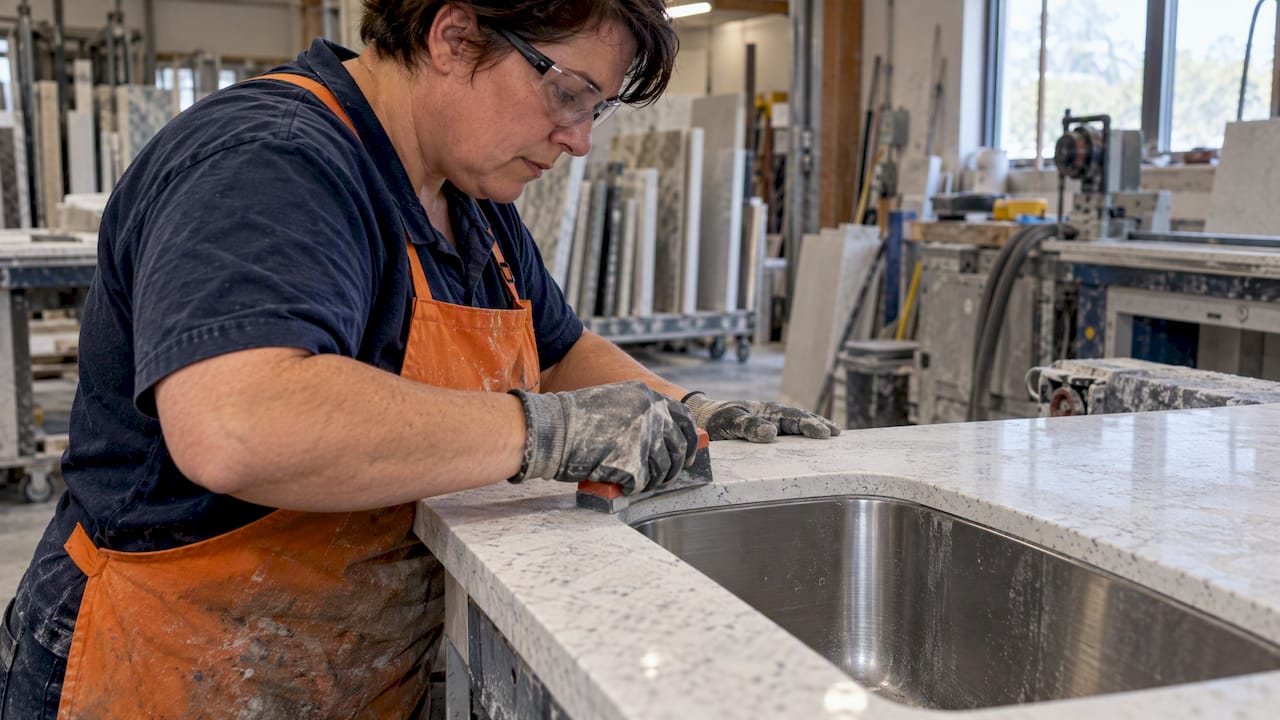
- Undermount: needs a solid, waterproof countertop such as quartz, granite, or solid-surface, and the installation takes more care, including an exposed edge that has to be cut and polished.
- Drop-in: costs less and works with nearly any countertop material including laminate, which makes it the more flexible option for budget-conscious remodels, per BobVila.
- Drop-in: sits on top with a visible rim that can trap crumbs and grime along the edge, and that rim eats into a sliver of usable counter space.
- Both: a low-profile or dual-mount sink can narrow the gap, giving you some of the undermount’s clean look while still working with a wider range of counters.
If you replace a sink every few years or rent out the property, the drop-in’s simplicity usually wins. If you are building a kitchen you plan to keep for a decade or more, the undermount’s cleaner line tends to earn its keep.
2. What installation and countertop compatibility actually require
The biggest difference between these two sinks is not how they look. It is what they demand from the counter above them and the hands installing them.
Undermount sinks attach to the underside of the counter, so the countertop needs a finished, waterproof edge, which is why they pair with quartz, granite, or solid-surface and not with laminate or MDF unless those materials are modified first, as Family Handyman explains. Drop-ins simply rest in a cutout, so the countertop material matters far less.
- Undermount sequence: the fabricator templates the sink location, cuts and polishes the exposed edge, sets the sink with clips or epoxy from below, then seals the seam with caulk.
- Drop-in sequence: a cutout is made in the counter, the sink drops in and rests on its rim, mounting clips secure it from underneath, and caulk seals the rim to the counter.
- DIY reality check: swapping one drop-in for another of the same size is a reasonable weekend project, while undermount work calls for precise templating and professional fabrication.
Heavier undermount sinks, especially fireclay or cast iron, sometimes need extra bracing or epoxy reinforcement under the counter to stay secure long term, a step Family Handyman flags as common professional practice.
Pro Tip: Before you commit to an undermount, ask your countertop fabricator exactly how they will finish the exposed edge, whether they add reinforcement for heavier sinks, and what warranty covers the seal between sink and counter.
3. Matching sink material to mount type and upkeep
Material drives performance more than style or brand. Consumer Reports testing found that stainless steel consistently holds up well against heat and impact, while decorative materials like fireclay or acrylic are more prone to chipping or staining.
- Undermount-friendly materials: stainless steel, fireclay, and composite granite pair well with quartz, stone, or solid-surface counters that can handle the exposed, polished cutout.
- Drop-in-friendly materials: stainless steel, enameled cast iron, and acrylic are common choices, since the rim design works with almost any counter.
- Undermount upkeep: check the caulk seal once or twice a year and recaulk at the first sign of cracking or water intrusion underneath.
- Drop-in upkeep: wipe along the rim regularly since that seam is where crumbs and grime collect, and avoid letting standing water sit against the caulk line.
Stainless steel sinks performed well across durability and heat tests, while decorative materials proved more vulnerable to damage, according to Consumer Reports. That one finding should carry more weight in your decision than brand name or finish trends.
Avoid setting hot pans directly in fireclay or acrylic basins, and skip abrasive scrubbers on anything other than stainless, since both habits shorten a sink’s working life regardless of mount type.
4. What drives the cost and how it affects resale value
The price gap between undermount and drop-in rarely comes from the sink itself. It comes from everything the installation touches.
- Countertop fabrication: undermount requires a cut, polished, finished edge, which adds labor and fabrication cost that a drop-in cutout does not.
- Sink material: stainless steel is typically the most affordable durable option, while fireclay and natural stone composites run higher.
- Installation labor: undermount takes longer and often calls for a specialist, while a drop-in swap can be a same-day job.
- Reinforcement: heavier undermount sinks may need bracing or epoxy support under the counter, another line item drop-ins skip entirely.
Undermounts show up more often in higher-end remodels, and that polished, rimless look can support how a kitchen reads to a future buyer, according to The Spruce. Drop-ins still make sense for rental units, tight budgets, or any project where you expect to replace the sink again before long. Over the life of the sink, factor in the undermount’s occasional recaulking against the drop-in’s simpler, faster replacement when the time comes.
5. Decision checklist and questions for your contractor
Before you sign off on a sink style, run through a short checklist with your contractor or fabricator.
- Countertop material: confirm whether your counter is waterproof and solid enough to support an undermount edge.
- Ownership timeline: a long-term home favors the undermount’s durability and look, while a short-term or rental property favors a drop-in.
- Budget: weigh the added fabrication and labor cost of an undermount against the drop-in’s lower upfront price.
- Usage intensity: a high-traffic kitchen sink sees more wear, so ask how each option handles daily scrubbing and heavy pots.
- DIY comfort: if you want to install the sink yourself, a drop-in swap is realistic while an undermount usually is not.
When you talk to a contractor or fabricator, ask directly: will this countertop support an undermount, how will you finish the exposed edge, what warranty covers the mount and seal, and do you add reinforcement for heavier sinks? Treat vague answers, especially no mention of the substrate or a shrug on the seal warranty, as a reason to ask more questions before signing anything.
6. How this plays out in real remodels
Across many completed projects, some contractors have recommended undermount sinks for kitchens with new quartz or granite counters, since the material supports the polished edge and the clean look matches the rest of the renovation. For rentals, laundry rooms, or tight budgets, the team has steered homeowners toward drop-in or dual-mount sinks that keep costs down without sacrificing function.
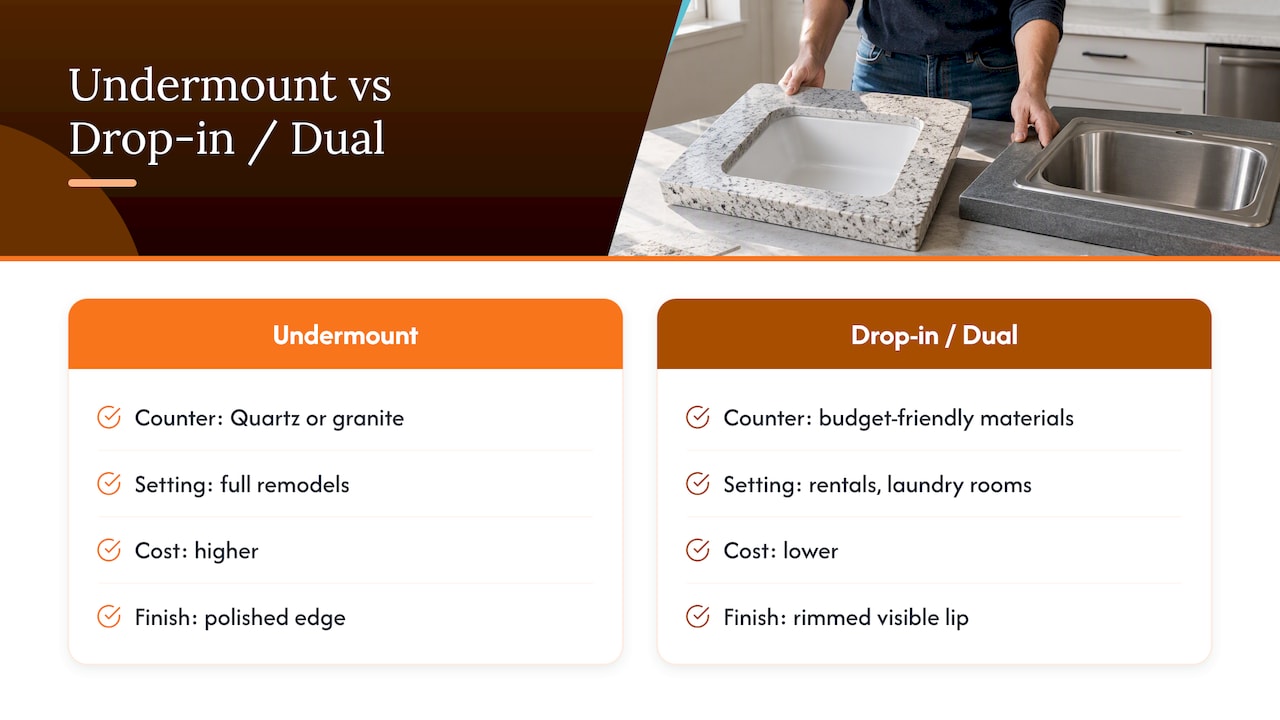
Experienced remodelers often coordinate countertop fabricators and sink installers directly, so the edge finish, reinforcement, and seal all match the countertop material chosen. That coordination is where most sink problems get caught before installation day, not after.
7. Why the “just pick what looks nice” advice falls short
Most sink advice online treats this as a style decision first and a practical one second. That gets it backward. The countertop you already have, or the one you are about to install, decides which sink styles are even on the table, and budget decides the rest.
The most overrated factor in this choice is trend. Drop-ins are often framed as dated, but a well-fitted rim with a low profile looks perfectly current and holds up fine in a busy household. The underrated factor is the seal. An undermount’s long-term success depends entirely on a caulk line most homeowners never think about until it fails.
If you take one thing from this, prioritize the countertop conversation before you fall in love with a sink photo. Confirm what your counter can support, then choose the sink that fits both the material and how you actually live in the kitchen.
— Cameron
8. Let us help you choose and install the right sink
Picking between undermount and drop-in gets easier with someone looking at your actual countertop and kitchen layout, not a general guide. Domestic Kitchen and Bath handles that review directly, coordinating sink choice with countertop material, fabrication, and installation as part of a full kitchen or bathroom remodel.

A consultation typically covers:
- A review of your current or planned countertop material and what it can support.
- A site assessment to flag any structural or plumbing issues before installation.
- Transparent pricing with no surprise line items once work begins.
Full kitchen and bathroom remodel costs vary widely depending on scope; for specific pricing details, please visit the company’s website. You can see current services and start a conversation at Domestic Kitchen and Bath.
Sources
- Best Sink Buying Guide – Consumer Reports
- Undermount vs Drop-In Sink (BobVila)
- Undermount vs. Drop-In Sink (Family Handyman)
- Undermount vs. Drop-In Sink: Which Is Better? (The Spruce)
FAQ
What are the downsides of an undermount sink?
Undermount sinks cost more to install and require a solid, waterproof countertop like quartz, granite, or solid-surface, which rules out laminate without modification. The seal between sink and counter also needs occasional inspection and recaulking to prevent water damage underneath, as Family Handyman notes.
Are drop-in sinks out of style?
Drop-in sinks are not out of style. They remain a practical, budget-friendly choice for rentals, high-traffic homes, and laminate counters, and a low-profile rim can give them a current look while keeping installation simple, according to BobVila.
What are the downsides of a drop-in sink?
A drop-in sink’s rim sits above the counter, which can trap crumbs and grime along the seam and slightly reduce usable counter space near the basin. The visible lip also reads as less seamless than an undermount, which matters in higher-end kitchen designs per The Spruce.
Is an undermount sink harder to install?
Yes. Undermount installation requires precise templating, a polished exposed countertop edge, and sometimes extra bracing for heavier sinks, which is why it usually calls for a professional rather than a DIY swap, as Family Handyman explains. Drop-in sinks, by contrast, simply rest in a cutout and are far easier to replace yourself.