
The best outdoor kitchen countertops are granite, quartzite, large-format porcelain, sealed concrete, and soapstone, with tile as a budget-friendly option and stainless steel reserved for covered kitchens. Climate and sun exposure decide which material wins for your yard, since freeze-thaw cycles and direct UV hit surfaces differently. If your layout includes a sink or gas hookup, check local permit rules before you commit to a design.
TL;DR:
- Natural stones like granite and quartzite are the most durable options for outdoor kitchens, resisting UV fading, heat, and cold climates when sealed properly.
- Porcelain slabs offer excellent weather resistance, minimal seams, and stain resistance, making them ideal for exposed environments.
- Proper substrate waterproofing, sealing, and installation details are critical for preventing cracking, staining, and early failure, especially in freeze-thaw regions.
- Tile can be a cost-effective, DIY-friendly choice, but grout lines require frost-rated porcelain and dark grout to withstand moisture and cold stress.
- Stainless steel is suitable mainly for covered kitchens due to its susceptibility to corrosion and heat in direct sun.
Table of Contents
- What makes a countertop survive outdoors
- Pros, cons, and tips by material
- Matching material to your climate and budget
- What outdoor countertops cost and where to spend wisely
- Installation and maintenance essentials
- What experienced installers look for on site
- Our take: durability beats trend every time
- How we build outdoor countertops that last in Sarasota
- FAQ
- Sources
- Primary sources for fabrication and material guidance
What makes a countertop survive outdoors
An outdoor countertop faces conditions an indoor surface never sees: direct sun, rain, humidity swings, and in colder climates, repeated freezing and thawing. Before picking a material, weigh it against these factors.
- UV resistance: whether color and finish hold up or fade under constant sun exposure.
- Porosity: how much moisture a surface absorbs, which drives staining and cracking risk.
- Heat resistance: how the surface handles a hot grill, pizza oven, or summer sun without scorching or warping.
- Freeze-thaw durability: whether trapped moisture can expand, crack, or flake the surface in winter.
- Maintenance demand: how often you’ll need to seal, polish, or otherwise tend the material to keep it performing.
A covered kitchen under a pergola or roofline gives you more flexibility, since it blocks rain and reduces UV load, while a fully exposed island needs a tougher, lower-maintenance material. Any countertop with a sink, gas line, or outdoor refrigerator built in should go through your local permitting process before installation.
Pros, cons, and tips by material
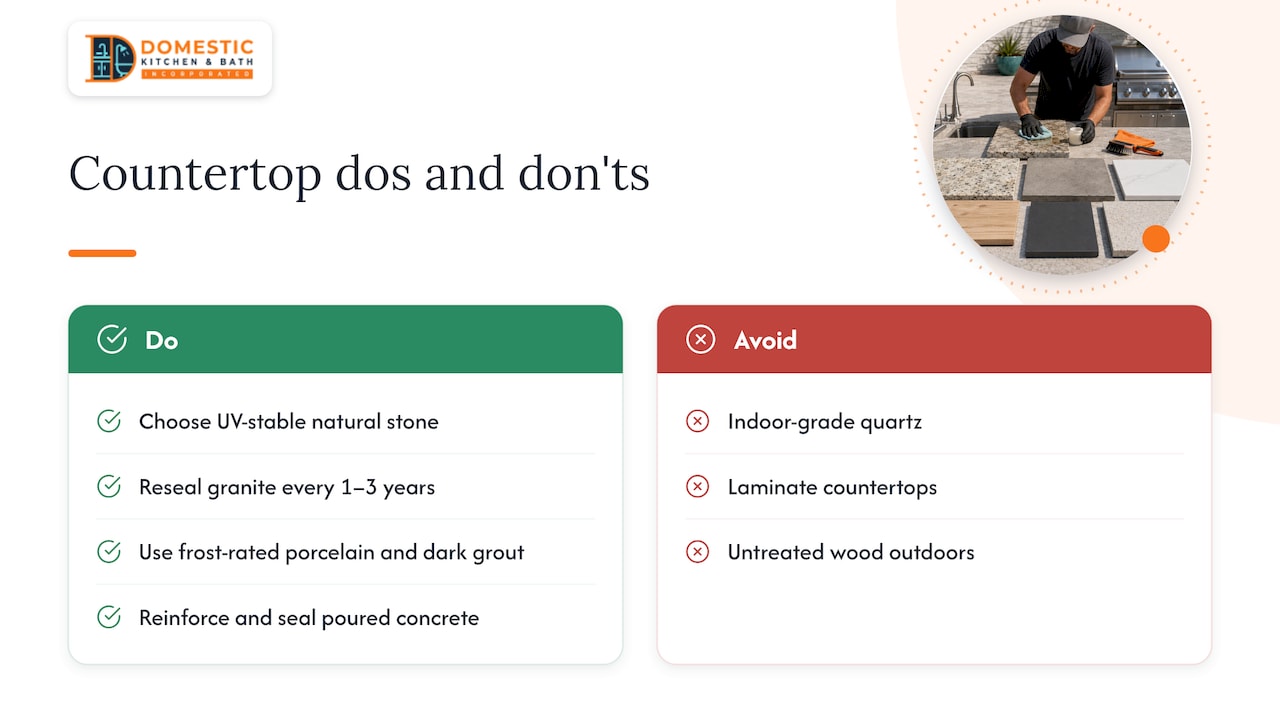
Granite remains a top choice for outdoor durability. It resists UV fading and handles heat well, but it’s porous, so plan to reseal it roughly every 1 to 3 years to guard against staining and moisture intrusion, according to HGTV. Avoid slabs with heavy veining that might be hiding filled cracks.
Quartzite is a natural stone, not to be confused with manufactured quartz. Quartzite holds up to UV exposure outdoors, while manufactured quartz can fade in direct sun and isn’t built for the elements, per HGTV.
Porcelain resists UV fading and stains well and comes in large-format slabs that minimize seams, making it one of the more weather resistant choices available, according to The Spruce. Ask your fabricator about edge treatment, since porcelain slabs are thin and need careful handling during cutting and installation.
Concrete offers nearly unlimited custom finishes but cracks without proper reinforcement. Installers use tensile steel reinforcement and apply sealant, with resealing as ongoing maintenance, per HGTV.
Tile is the most affordable route and friendly to DIY, but grout lines are the weak point: they stain, absorb moisture, and crack under freeze-thaw stress if the substrate isn’t waterproofed correctly, according to The Spruce. Choose frost-rated porcelain tile with dark grout to hide staining.
Stainless steel is nonporous and easy to sanitize, but it can corrode in wet, salty air and gets hot to the touch in direct sun, so it fits best under a roof or pergola, per The Spruce.
Soapstone and similar dense stones offer a lower-maintenance alternative to granite, though slab availability and color range are more limited.
Skip these: indoor-grade quartz (resin binders degrade in UV light), laminate (swells and delaminates with moisture), and untreated wood (rots and warps outdoors).
Pro Tip: Ask any fabricator whether the slab you’re considering is rated for full outdoor exposure, not just “outdoor friendly” marketing language.
Matching material to your climate and budget
Pick your material using these rules of thumb:
- Hot, sunny climates: favor granite, quartzite, or porcelain, all of which resist UV fading better than manufactured quartz.
- Cold, freeze-prone regions: choose dense natural stone or frost-rated porcelain tile with proper substrate waterproofing to prevent freeze-thaw cracking.
- Covered kitchens: stainless steel and concrete both perform well once shielded from direct rain and sun.
- Heavy grilling stations: prioritize heat-resistant stone like granite or quartzite near the cook surface.
- Sink or plumbing cutouts: confirm the material and fabricator can handle precise cutouts without weakening the slab, and pull permits where required.
If your budget is tight, frost-rated porcelain tile gets you a durable look for less. If you’re building for the long haul, a full slab of granite or quartzite costs more upfront but avoids the recurring grout maintenance tile demands. Ask any contractor about substrate type, sealing frequency, and what the warranty actually covers before signing.
What outdoor countertops cost and where to spend wisely
Cost varies by material, slab complexity, and how many cutouts and edge details you need. Full stone slabs cost more than tile, and intricate edge profiles or multiple seams add labor time regardless of material.
- Spend on a correctly built, waterproofed substrate: it protects the surface above it for decades.
- Spend on minimizing seams where possible, since fewer joints mean fewer failure points.
- Save by choosing a simpler finish or edge profile on an otherwise premium material.
- Save with frost-rated porcelain tile instead of full slab stone if your outdoor kitchen is covered.
- Check our current offers before budgeting your project.
Installation and maintenance essentials
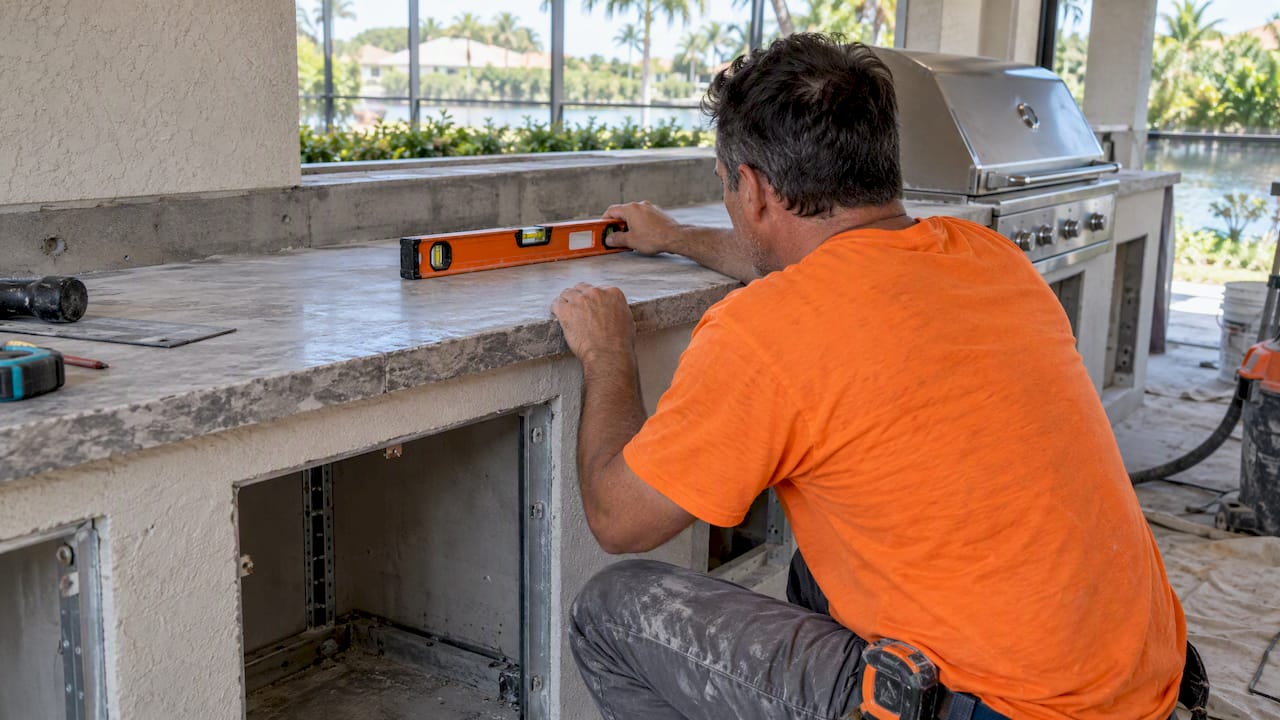
The substrate under your countertop matters as much as the surface material. A waterproofed, properly flat substrate prevents cracking and water intrusion, so ask your contractor exactly how they’re building it before work begins.
- Reseal porous stone and concrete every 1 to 3 years depending on exposure and climate, per HGTV.
- Use frost-rated porcelain tile and freeze-resistant adhesives in cold climates to prevent grout and tile cracking.
- Clean stainless steel regularly to head off corrosion from humid or salty air.
- Confirm your fabricator follows manufacturer handling and storage guidance for outdoor installs, since engineered surfacing often requires special transport and storage care, according to IceStone’s fabrication guidelines.
Sealing on a 1 to 3 year cycle protects porous stone and concrete from staining and moisture damage, according to HGTV. Skipping that cycle is one of the most common reasons outdoor stone countertops fail early.
What experienced installers look for on site
Many experienced installers have completed over 1,000 remodeling projects over 25-plus years, and outdoor kitchens bring their own set of site conditions that indoor countertop work doesn’t. Before hiring anyone, confirm the contractor is licensed and insured, ask to see examples of outdoor work specifically, and get a clear sealing and warranty plan in writing.
Common onsite issues we watch for include poor drainage slopes under the slab, insufficient clearance around grills and other heat sources, and uneven substrate flatness that stresses the stone over time. Catching these before installation avoids cracked seams and water damage down the road.
Our take: durability beats trend every time
Outdoor countertop advice online tends to lead with looks: color, pattern, how a slab photographs. That’s backwards. The material decision that actually determines whether your outdoor kitchen looks good in five years is sealing schedule and substrate, not the stone’s veining pattern.
The most overrated factor we see homeowners fixate on is matching their indoor countertop material outdoors for a “cohesive” look. Indoor quartz and laminate simply weren’t built for UV and moisture, and forcing them outside sets up an early, expensive replacement.
Prioritize climate fit first, maintenance commitment second, and aesthetics third. A granite or quartzite slab that gets resealed on schedule will outlast a trendier material installed without a waterproofed substrate, every time.
— Mark
How we build outdoor countertops that last in Sarasota
We design and install outdoor kitchen countertops in Sarasota with full 3D planning, fabrication oversight, and a sealing and warranty plan built around Florida’s heat and humidity.

- We handle substrate and waterproofing correctly the first time to help prevent cracking and staining that cause early failures.
- We back every project with a satisfaction guarantee and clear warranty terms.
Request a design estimate through our outdoor kitchen contractors page and start planning a countertop built for your climate.
FAQ
What is the best countertop for an outside kitchen?
Granite and quartzite are among the top choices for outdoor kitchens because they resist UV fading and handle heat well, according to HGTV. Large-format porcelain is a close alternative with strong stain and weather resistance.
What is the cheapest countertop for an outdoor kitchen?
Tile is generally the most affordable outdoor countertop option and is accessible for DIY installation, according to The Spruce. Choose frost-rated porcelain tile with dark grout to limit staining and freeze-thaw damage over time.
What is the best surface for an outdoor kitchen?
Porcelain is a practical, low-maintenance surface because it resists stains and weathering while coming in large slabs that reduce seams, per The Spruce. Stainless steel works well too, but only in covered kitchens, since it can corrode and heats up in direct sun.
What are some good waterproof outdoor countertops?
Porcelain stands out as a nonporous, weather resistant option that holds up well outdoors, according to The Spruce. Sealed granite, quartzite, and concrete also perform well against moisture once properly sealed and resealed on a regular schedule.
Sources
- 10 Types of Outdoor Kitchen Countertops
- What’s the Best Material for Outdoor Kitchen Countertops | HGTV
- Icestoneusa
Primary sources for fabrication and material guidance
For product-specific outdoor suitability, check manufacturer and fabricator guidance directly before purchasing, since handling and warranty rules vary by material.