
If you want a flush look and better clearance in a tight kitchen, a counter-depth fridge is the better pick; if you need maximum storage for a large household, a standard-depth model wins. Counter-depth units typically run 24 to 30 inches deep with 15 to 25 cubic feet of storage, while standard models go deeper and hold more. Here’s how to measure, compare, and decide.
TL;DR:
- Measure the cabinet opening, delivery route, and door swing; leave at least 1 inch behind the refrigerator and hinge clearance beyond 90 degrees.
- Counter depth refrigerators hold 15 to 25 cubic feet, while standard units offer 20 to 32 or more; compare usable shelf space, not capacity alone.
- Galley kitchens benefit from a narrower footprint, while open layouts can accommodate standard depth; frequent bulk shopping favors the added storage.
- Counter depth refrigerators often cost more per usable cubic foot, while energy use depends on the model; check its Energy Star label.
- A freestanding counter depth refrigerator still projects at its doors and handles; a true flush fit may require custom panels or cabinet remodeling.
Table of Contents
- Counter-Depth vs Standard Fridge at a Glance
- How to Measure Your Space and What Clearances You Need
- What the Cubic Feet Numbers Mean for Your Groceries
- Appearance and Workflow: How Depth Affects Daily Movement
- Cost, Features, and Energy: What to Expect
- Your Decision Checklist: Measure, Compare, Choose
- A Remodeler’s View on Buying vs Rebuilding
- Our Take: Measure Before You Fall for the Look
- How We Help You Get the Fit and Look You Want
- FAQ
- Sources
Counter-Depth vs Standard Fridge at a Glance
Counter-depth refrigerators are built to sit nearly flush with your countertops, which is why they run shallower than standard models. Standard-depth units trade that flush look for more interior room, which matters if you’re stocking a full pantry’s worth of cold storage every week.
| Feature | Counter-depth | Standard-depth |
|---|---|---|
| Exterior depth | ~24-30 inches | ~36 inches |
| Interior capacity | ~15-25 cu ft (avg ~22 cu ft) | ~20-32+ cu ft (Whirlpool) |
| Visual fit | Nearly flush with cabinets | Protrudes past counters |
| Best for | Narrow kitchens, open sight lines | Large households, bulk storage |
A few quick takeaways help narrow the field fast:
- Counter-depth models save floor space and keep walkways clearer in galley kitchens.
- Standard-depth models offer more shelf and drawer room for large grocery hauls.
- Neither option is universally “better”: the right one depends on your household size and how your kitchen is laid out.
How to Measure Your Space and What Clearances You Need
Before you shop, grab a tape measure and check the actual opening, not just the old fridge’s footprint. Measure width, height, and depth from the cabinet face to the wall, then add room for the door to swing fully open.
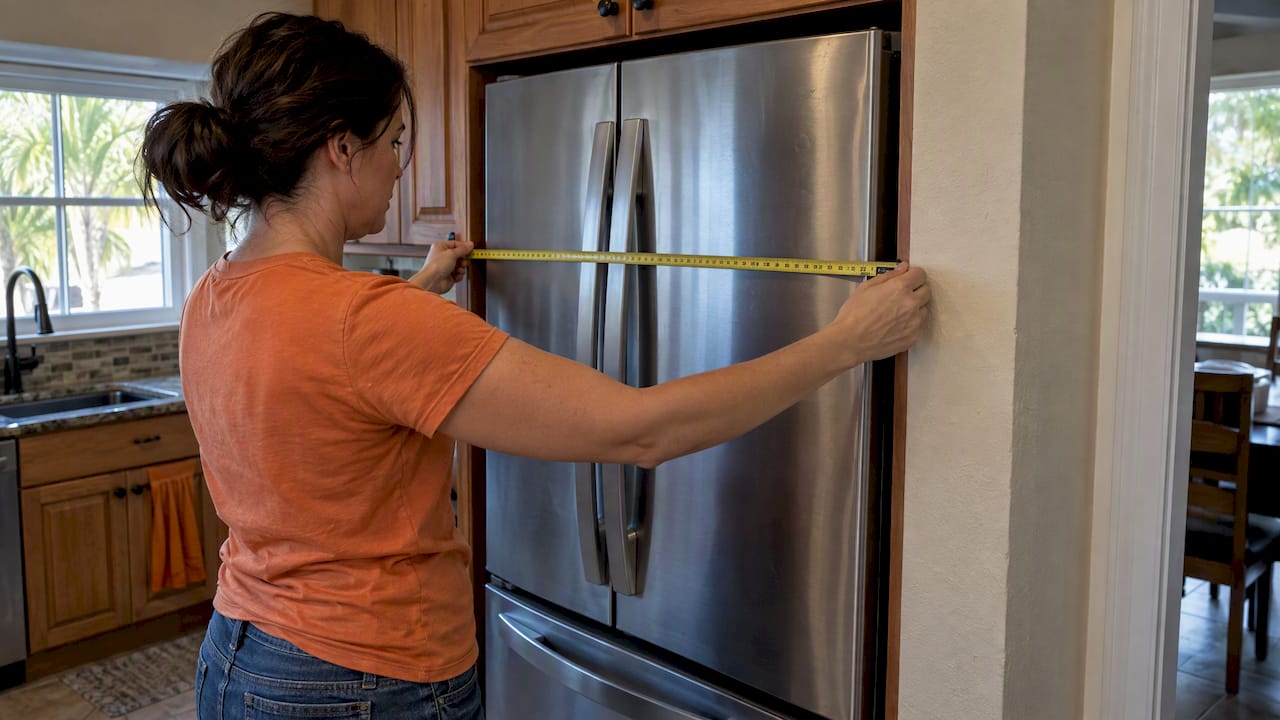
Counter-depth doors still stick out several inches past the cabinet face once open, even though the body of the unit sits flush. Samsung’s buying guide notes that handles and door panels add projection that the exterior depth spec doesn’t capture, so leave clearance for that swing no matter which depth you choose.
Consumer Reports recommends at least 1 inch of clearance behind the unit for airflow, plus enough room on the hinge side for the door to open past 90 degrees for drawers to slide out.
Run through this checklist before you order:
- Measure the cabinet opening’s width, height, and depth.
- Measure from the wall to the front of adjacent counters or islands.
- Check hallway and doorway widths along the delivery path.
- Confirm at least 1 inch of rear clearance for ventilation.
- Verify the door can swing fully open without hitting cabinets or walls.
Pro Tip: Measure your narrowest doorway or hallway on the delivery route, not just the kitchen opening. Many returns happen because the fridge never made it past the front door.
What the Cubic Feet Numbers Mean for Your Groceries
Capacity specs on a spec sheet don’t tell you much until you picture what fits inside. Whirlpool’s measurement guide puts counter-depth capacity at roughly 15 to 25 cubic feet, averaging around 22, while standard models commonly reach 20 to 32 cubic feet or more.
That gap matters most for everyday items. Counter-depth models that trade depth for height or width can still hold a surprising number of gallon jugs and deli platters, but the shelf-to-shelf room for wide trays or sheet pans shrinks faster than the overall cubic footage suggests.
A few organizational features help close that gap:
- Split or adjustable shelves let you reconfigure space for tall bottles or wide platters.
- Door bins add storage without eating into main shelf depth.
- Humidity-controlled drawers keep produce fresh without taking up prime shelf space.
Compare usable capacity, not just the depth spec, when you’re shortlisting models. Two fridges with the same exterior depth can hold noticeably different amounts of food depending on shelf design.
Appearance and Workflow: How Depth Affects Daily Movement
A counter-depth fridge improves sight lines across the kitchen, especially if you’ve got an island or a pass-through to a dining area. Less protrusion means less visual bulk blocking the path from the stove to the sink.
Layout tends to decide this for you:
- Galley and narrow kitchens benefit most from counter-depth, since every extra inch of aisle width counts.
- Large open kitchens with wide walkways can absorb a standard-depth fridge without feeling cramped.
- A counter-depth freestanding unit approximates a flush look but still shows some door and handle projection, while a true built-in model is designed from the ground up to sit flush, which is a different project and a different budget.
If a genuinely flush look is the goal, know the difference between buying counter-depth and installing a built-in before you shop.
Cost, Features, and Energy: What to Expect
Counter-depth models often cost more per usable cubic foot than standard units with similar features, since you’re paying for a smaller footprint rather than more storage. That price gap tends to widen with premium finishes or smart features layered on top.
Energy use comes down to the specific model and its insulation, not depth alone, so an Energy Star label is a more reliable signal than exterior measurements.
Watch for these features when comparing price tags:
- Ice and water dispensers add cost and take up some interior space.
- Smart features like app connectivity or cameras raise the price without affecting storage.
- Panel-ready fronts, which accept custom cabinetry panels, cost more but deliver the closest match to a built-in look.
Your Decision Checklist: Measure, Compare, Choose
Once you know your measurements and your household’s habits, the decision gets a lot simpler. Work through these steps in order:
- Measure your cabinet opening, delivery path, and door swing clearance.
- Record how your household shops and cooks: frequent small trips favor less capacity, while bulk shopping favors more.
- Decide whether a flush look is a priority or whether capacity is the deciding factor.
- Shortlist counter-depth and standard models that physically fit your space.
- Compare usable capacity and confirm delivery logistics before you order.
Pro Tip: If cabinets would need to be cut back or rebuilt to fit your preferred fridge, that’s the moment to call a remodeler instead of forcing a fit that won’t work.
When a flush look matters more than anything else and your current cabinets won’t accommodate it, altering cabinet depth or adding panel-ready fronts is a legitimate route, just one that involves more planning than swapping an appliance.
A Remodeler’s View on Buying vs Rebuilding
Sometimes the fridge isn’t the problem: the cabinet opening is. We’ve seen kitchens where a counter-depth model still doesn’t sit flush because the surrounding cabinetry was never built for it. In those cases, altering cabinet depth or adding panel-ready fronts gets the look right, though it adds cost, time, and some disruption to your kitchen while work is underway. With extensive experience and a satisfaction guarantee on every project, we’ve walked plenty of homeowners through that exact tradeoff.
Our Take: Measure Before You Fall for the Look
Most homeowners decide this question with their eyes before they decide it with a tape measure, and that’s backwards. A flush-looking fridge that blocks your walkway or can’t hold a week of groceries isn’t a win just because it looks built-in.
Measure first, then think about how you actually cook and shop. Counter-depth suits kitchens where flow matters most; standard-depth suits households that live on bulk groceries and need every cubic foot. The short version holds: choose counter-depth for fit and sight lines, standard-depth for storage.
— Mark
How We Help You Get the Fit and Look You Want

If your cabinets can’t accommodate the counter-depth fridge you want, or you’re ready for a true built-in look, we handle the cabinetry, panel-ready installs, and appliance coordination that make it work. Our kitchen remodeling projects in Sarasota come with transparent pricing and a satisfaction guarantee, so you know what you’re getting before work starts. Measure your space, then talk to our team about current kitchen remodel offers to see what fitting your dream fridge actually involves.
FAQ
How long do refrigerators typically last?
Most refrigerators last around 10 to 20 years depending on usage, maintenance, and build quality. Regular coil cleaning and avoiding overloading shelves can help a unit reach the higher end of that range.
How do counter-depth fridges open?
Counter-depth fridges open the same way as standard models, with hinged doors that swing out from the cabinet face. The body sits nearly flush with your counters, but the door and handle still project several inches once open, so you still need swing clearance.
What is the standard depth of kitchen countertops?
Standard kitchen countertops typically measure around 24 to 25 inches deep from the wall to the front edge. That’s the benchmark counter-depth fridges are designed to match for a flush appearance.
What is the depth of a French door fridge?
French door fridge depth varies by whether it’s counter-depth or standard: counter-depth French door models commonly sit around 27 to 29 inches deep, while standard French door models often run deeper, sometimes approaching 36 inches. Check the exact spec sheet for the model you’re considering since ranges vary by brand.