
Heated bathroom floors are an electric (or, less often, hot-water) system installed under your finished floor so the surface stays warm underfoot. For a typical full bathroom, a complete installed system with thermostat runs roughly $700 to $1,400, and the best time to add one is during a remodel, when the old floor is already coming up. This guide covers how the systems work, what drives the price, what they cost to run, which floors suit them, and how to decide.
Key Takeaways
- Electric cables or mats are the usual choice for a bathroom. Hot-water (hydronic) systems make more sense for whole-house heating.
- Installed estimates published by a U.S. heated-flooring supplier run about $400 to $800 for a powder room and $700 to $1,400 for a full bathroom, before any demolition or tile upgrade.
- Ceramic, porcelain and stone tile conduct and hold heat best. Rugs and carpet reduce the effect.
- The upgrade is easiest and cheapest when it is planned with a remodel that already replaces the floor.
- Bathrooms need GFCI protection and correct clearances, so have a licensed electrician handle the wiring.
Table of Contents
- How Heated Bathroom Floors Work
- What Heated Bathroom Floors Cost to Install
- What It Costs to Run
- Which Flooring Works Best
- Safety: Wiring, GFCI and Clearances
- Are Heated Bathroom Floors Worth It?
- Our Perspective
- Planning Heated Floors Into a Remodel
- Bathroom Remodeling in Sarasota
- FAQ
- Sources
How Heated Bathroom Floors Work
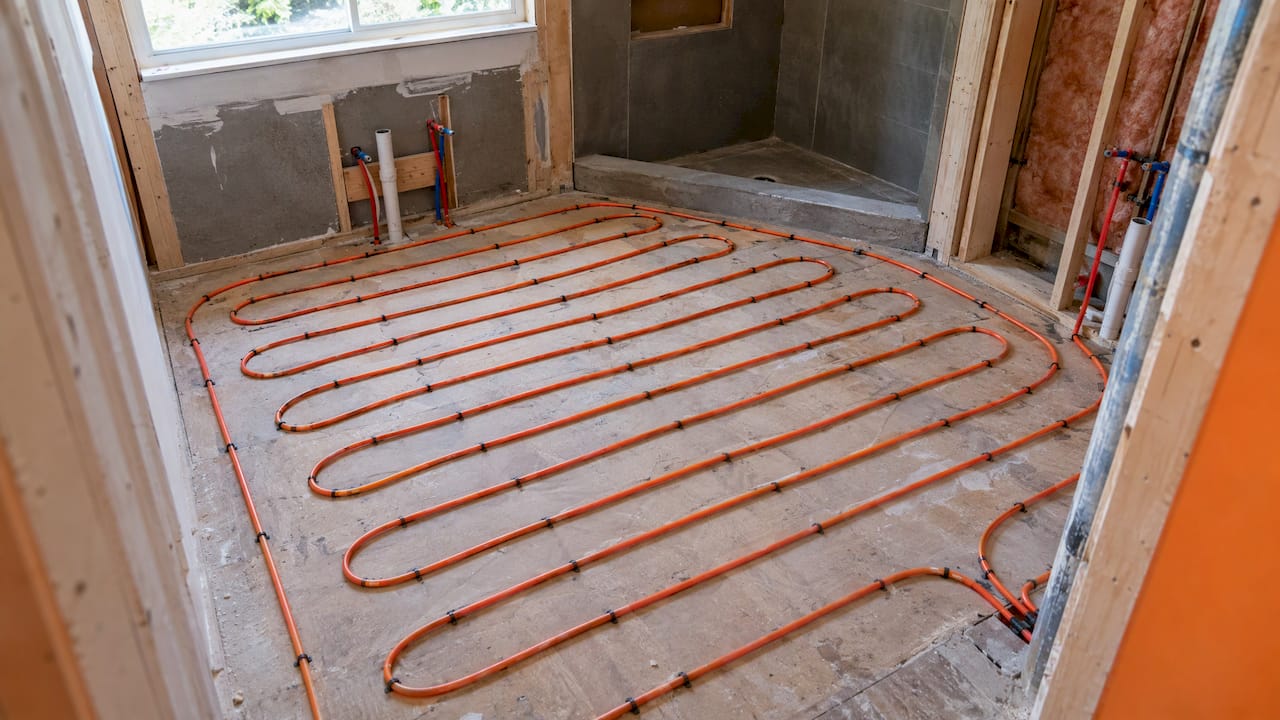
Radiant floor heating warms the floor surface, and the floor then warms you and the objects in the room through radiant heat rather than blowing hot air around. This Old House describes two ways to do it: circulating hot water through tubing, or running electrical resistance cables beneath the floor.
For bathrooms, the choice is nearly always electric. The same source notes that electric systems use cables or mats under the floor and suit smaller areas, while hydronic systems that circulate heated water through PEX tubing tend to be more cost-effective and efficient for larger spaces and colder climates. HowStuffWorks adds that electric radiant heat is typically used in single rooms because heating a whole house with electricity gets expensive.
Electric cables, mats and membranes
Electric systems come in a few forms:
- Loose cables are laid out in a pattern and embedded in thinset or a leveling layer. They adapt well to odd shapes, such as a bathroom with a tub alcove or a curved vanity wall.
- Mesh mats are cables pre-attached to a mesh that you roll out. They install faster and suit rectangular floors.
- Membrane systems combine an uncoupling layer with the heating cable, so one product handles crack protection and heat.
All three connect to a thermostat with a floor sensor, so the floor warms to the temperature you set rather than running constantly.
Hydronic systems in a bathroom
Hydronic floors tie into a boiler or water heater and circulate warm water through tubing. They can be efficient when a whole home is being heated this way. For a single bathroom in an existing house, the tubing, pumps and controls rarely make sense. If you are building new or gutting the whole house, a hydronic loop deserves a conversation with your builder.
What Heated Bathroom Floors Cost to Install
Price depends on the size of the heated area, the system type, the thermostat, the floor finish, and how much work it takes to reach the subfloor. Here are published figures to anchor your budget.
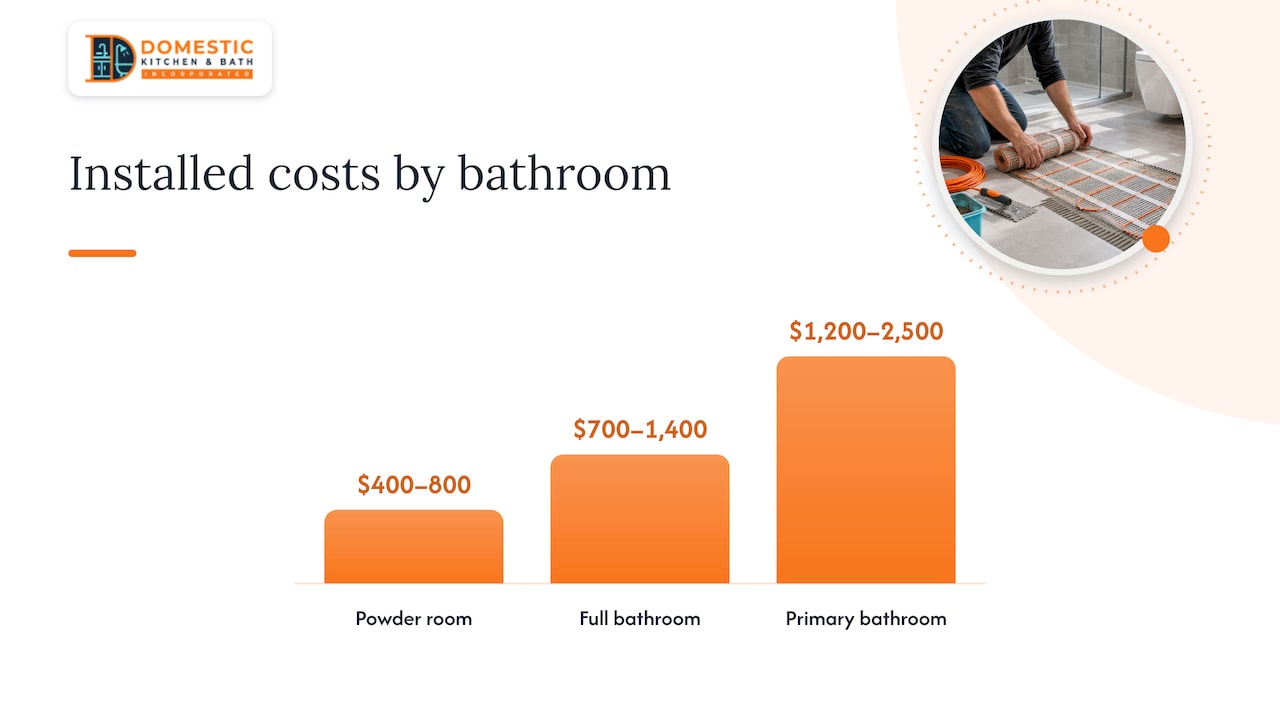
WarmlyYours’ U.S. cost guide estimates installed totals, including the heating system, thermostat, typical flooring and electrical labor, at:
| Bathroom type | Approximate size | Estimated installed total |
|---|---|---|
| Powder room | 11 to 20 sq ft | $400 to $800 |
| Full bathroom | 36 to 40 sq ft | $700 to $1,400 |
| Primary bathroom | 60 to 100 sq ft | $1,200 to $2,500 |
The same guide breaks out the pieces: flooring labor commonly runs $5 to $15 per square foot, tile installation over radiant heat typically $8 to $12 per square foot, and electrical connection about $200 to $500. Local labor rates, wall access and whether you need a dedicated circuit all move the number.
A second supplier, Warmup, reports installation labor of $50 to $130 per hour and tile material at $3 to $20 per square foot. It also notes that removing an existing floor and working around irregular room shapes both add cost.
For older context, Consumer Reports reported in 2017 that electric radiant mats cost roughly $11 per square foot of open flooring. Prices have moved since then, so treat that as a floor for comparison, not a quote.
Heat only the floor you walk on
You rarely heat the whole room. WarmYourFloor says electric systems commonly cover about 60% to 80% of a room, since there is no reason to heat the area under a vanity, tub or toilet. Size your estimate from the open walking area, not the gross square footage. A 40-square-foot bathroom may only need a mat covering 28 to 32 square feet.
Where the money goes: a worked example
Say you have a 40-square-foot full bath and plan to retile. Heated area of about 30 square feet. The heating mat and thermostat are a modest part of the bill. The larger costs are the same ones any retile involves: demolition, subfloor prep, tile and setting labor, plus an electrician to run a circuit and connect the thermostat. That is why the line item for “heated floor” often looks small when it rides along with a remodel, and large when it is a stand-alone retrofit.
What It Costs to Run
Electric floors use resistance heating, so running cost depends on the wattage of your system, how many hours it runs, and your local electric rate. Rather than quote a single number that may not fit your home, calculate it: multiply the system’s wattage by hours of use, divide by 1,000 to get kilowatt-hours, and multiply by your utility rate. Your electric bill and the product’s spec sheet give you both inputs.
Two habits keep the bill down:
- Use a programmable thermostat. Have the floor warm up shortly before your morning routine rather than running all day.
- Consider off-peak rates. HowStuffWorks notes that some homeowners take advantage of off-peak electricity by heating overnight and using the stored warmth the next day. Ask your utility whether it offers a time-of-use plan.
Because a bathroom floor is small and used in short bursts, running it on a schedule is usually a minor line on the monthly bill.
Which Flooring Works Best
Heat has to move through your finished floor to reach your feet, so the material matters. According to Family Handyman, ceramic and stone tile conduct and hold heat best, which makes them the natural partner for a bathroom. Floating wood or plastic laminate can work within temperature limits, solid wood may develop gaps, and carpets or rugs reduce heat flow.
In practice:
- Porcelain and ceramic tile: the top choice. They are durable, water-resistant and carry heat well.
- Natural stone: conducts heat well and feels luxurious, though it needs sealing.
- Luxury vinyl and laminate: possible, but confirm the manufacturer’s maximum floor temperature and approved heating systems before buying.
- Bath mats: a thick rug over the heated zone blunts the effect, so choose thin ones.
If you are choosing tile anyway, the premium for heating is mostly the system itself, not a change of material.
Safety: Wiring, GFCI and Clearances
Electricity and water share this room, so the details matter. Heated floors are designed for bathrooms, and safe installation comes down to correct wiring and layout.
- GFCI protection. The National Electrical Code requires ground-fault protection for receptacles in bathrooms and damp or wet locations, as the Electrical Safety Foundation International’s code summary shows. Per ESFI’s GFCI guidance, a GFCI automatically cuts power when a ground fault occurs, which can happen if equipment gets wet. Heated floor thermostats are typically supplied with ground-fault protection built in or connected to a GFCI-protected circuit. Follow the manufacturer’s installation manual and your local code.
- Clearances. Family Handyman’s installation guide advises keeping the heating mat four inches from walls, showers, tubs and the toilet wax ring, and not installing it under a vanity.
- A licensed electrician. The same guide calls electric mats easy to install but recommends hiring an electrician if you are not comfortable with the wiring. In a wet room, we would go further: have a licensed electrician connect the thermostat and circuit, and check whether your city or county requires a permit for the work.
Are Heated Bathroom Floors Worth It?
It depends on when you add them and what you want from them.
Benefits. Forbes Home lists consistent warmth, comfort, efficiency and allergen reduction. Radiant heat doesn’t push dust around the way forced air can, which is why people with allergies often prefer it.
Trade-offs to plan for. Upfront cost is higher than doing nothing, existing flooring generally has to be removed and reinstalled, and components hidden under the surface are harder to reach if something fails. Forbes also notes the system can raise floor height by about an inch, which matters at doorways and the shower threshold. Choosing a quality product with a good warranty and having the system tested before tile goes down are the practical answers.
The sweet spot. Forbes Home frames radiant heat as primarily a comfort upgrade for individual rooms such as bathrooms, not a main heating source. It is best when installation is coordinated with a renovation that already includes floor removal. A real estate agent and designer interviewed by Realtor.com say it may not deliver a quick return on investment, but comfort, quiet operation and buyer appeal can justify it, especially during a planned renovation.
Ask yourself:
- Am I already replacing the bathroom floor?
- Do I have enough open floor for the system to matter?
- Can an electrician reach a panel and run a circuit without major wall work?
- Will I use the room enough on cool mornings to notice?
Three or four yeses is a strong case. If the answer to the first question is no, weigh whether a retile just for heat is worth it.
Our Perspective
Homeowners usually ask us about heated floors after the plan is already drawn, and that is the moment it costs the most to add. The system is small. The disruption is not. If the tile is coming up anyway, the heat is one more layer in a job we are already managing.
We plan it at the design stage. That means deciding the heated zone against the layout of the vanity, tub and toilet, placing the thermostat where it is reachable, and confirming the electrical capacity before demolition starts. We handle demolition, electrical, flooring and waterproofing on the same project, so the heating layer is coordinated with the rest instead of squeezed in afterward.
Our approach is custom design, transparent pricing and minimal disruption, with licensed and insured professionals and attention to Florida’s local permitting requirements. A warm floor is a small luxury that homeowners tell us they use every day. If you want a bathroom that feels like a retreat, we think it belongs on the list.
Mark
Planning Heated Floors Into a Remodel
If you decide to go ahead, this sequence keeps the project smooth:
- Set your total budget first. Heated floors are one line within a larger bathroom budget.
- Choose tile before the heating product. Make sure the floor finish is approved for use with radiant heat.
- Mark the heated zone. Leave the clearances noted above and skip areas under fixtures.
- Confirm electrical needs. Ask whether a dedicated circuit is needed and whether your panel has capacity.
- Test before and after. Have the installer measure the cable’s resistance before covering it, after setting it, and again after the tile is down.
- Program the thermostat. Set a schedule that matches your routine.
If your remodel is a small one, our small bathroom remodel ideas show how to make a compact room feel bigger, and the same layout thinking applies to where a heated zone goes.
Bathroom Remodeling in Sarasota
Our published price range for a full bathroom remodel is $15,000 to $45,000, depending on scope, finishes and layout. Heated floors fit inside that range as one of the comfort upgrades you can choose, alongside custom cabinetry, new countertops, lighting and ventilation. We are a family-owned remodeler in Sarasota with more than 25 years of experience, over 1,000 completed projects and a 4.9 out of 5 average customer rating, and we back our work with a satisfaction guarantee.
If you want to see how we handle a full bathroom project, visit our bathroom remodeling page for Sarasota, or start from our main site to request a consultation and talk through a warm floor for your plan.

Bring your wish list to the first conversation: heated floor, shower layout, vanity, storage. We will walk through what fits your budget and your home, in writing, before work begins.
FAQ
How much do heated bathroom floors cost?
For a full bathroom of roughly 36 to 40 square feet, a U.S. supplier’s guide estimates about $700 to $1,400 installed, including the thermostat and typical flooring and electrical labor. Powder rooms run lower and large primary baths higher. Demolition, floor upgrades and electrical complications can add to that.
Are heated floors in bathrooms safe?
Yes, when installed correctly. Systems should be on GFCI-protected circuits, kept clear of walls, tubs, showers and the toilet wax ring, and left out from under vanities. Have a licensed electrician do the connection and follow your local code.
Can you add heated floors to an existing bathroom?
Usually only by removing the current floor, since the heating layer sits under the finished surface. That is why most homeowners add it during a remodel. Forbes notes the system can also raise the floor height by about an inch.
What flooring works best with heated floors?
Ceramic, porcelain and stone tile are the best performers because they conduct and hold heat well. Some floating laminate and vinyl products are rated for radiant heat within temperature limits, but rugs and carpet reduce the warmth you feel.
Do heated bathroom floors use a lot of electricity?
Because the area is small and used in short bursts, most homeowners run them on a schedule rather than all day. Multiply the system’s wattage by hours of use and your utility rate to estimate your monthly cost, and ask about off-peak rates.
Sources
- All About Radiant Floor Heating, This Old House
- How Radiant Floor Heating Works, HowStuffWorks
- Bathroom Floor Heating: How Much It Costs and How to Install, WarmlyYours
- How Much Does a Heated Bathroom Floor Cost, Warmup
- Heated Bathroom Floors: Costs and Considerations, WarmYourFloor
- How to Cut Bathroom Remodeling Costs, Consumer Reports
- Radiant Floor Heat Systems: Electric vs. Hydronic, Family Handyman
- How to Install In-Floor Radiant Heat, Family Handyman
- Is Radiant Floor Heating Worth It?, Forbes Home
- Are Heated Floors Worth It?, Realtor.com
- NEC GFCI Code Book, ESFI
- How to Use GFCIs, ESFI